Christopher J. Neville, M.Sc., P.Eng. Chief Hydrogeologist with S.S. Papadopulos & Associates, Inc.
Continuing Education Information:
1.6 Continuing Education Units (CEUs) (16.0 Professional Development Hours)
Most state professional licensure programs accept CEUs for this course.
Eligible or Pre-Approved CEUs:
NY PG: Provider No. #213 NY PE: Provider No. #213 MD PE: Approved Provider MA LSP: Course No MA LSP 1231 CT LEP: Course CT LEP 122 South Carolina PGs: SCPG 1712 IA CGWP CO REP Texas CAPM: (reference course title) NJ LSRP (just applied to the Board for review approval)
Continuing Education Units (CEUs) and Course Completion Certificates from Midwest GeoSciences Group are distributed at the end of the course.
Who should attend:
This course is designed for ground water scientists and engineers, project managers, compliance program managers and remedial design managers.
This course begins with a brief overview of hydrogeologic principles of pumping and slug testing then continues at an advanced level throughout the course to cover the range of conditions typically encountered during field investigations.
Data analysis exercises include both simple and advanced pumping and slug test analyses to match the range of conditions typically encountered during field investigations.
What to Expect:
Expect to learn about the latest techniques of aquifer testing. A list of course attributes are listed on the following page:
What to Bring:
Bring your laptop computer and a calculator.
Download and install the AQTESOLV demo from www.aqtesolv.com before arriving at the course.
Bring hard soled shoes, sunscreen, your field clip board and and field forms you normally use. (We can provide field forms too).
Bring high expectations. We strive to make this the premiere aquifer testing course. Plus, you can expect to have some light hearted humor and fun along the way.
Course Details
Introduction:
Conducting aquifer tests in complex hydrogeologic settings such as heterogeneous or fractured media often leads to suspect data or unanswered questions after the field work is complete. Even when you are confident of the geologic conditions, you may have difficulty designing effective aquifer tests, running field equipment, or selecting the best available model to analyze the test data. Where can you turn to improve your approach and skills for hydrogeologic site characterization?
Midwest GeoSciences Group can help! We have designed a powerful three-day training course on aquifer testing design, field methods, and data analysis techniques featuring AQTESOLV and the In-Situ Level TROLL. This course will provide you with the knowledge to master aquifer testing from beginning to end--using world-class field equipment and aquifer test analysis software.
Bring Your Computer: Analyze data from a variety of hydrogeologic conditions and well configurations using AQTESOLV. Participants are welcomed to bring their own project data for analysis for QA/QC by the instructors.
Course Topics:
Hydrogeologic Site Characterization
Learn to design the most effective aquifer test programs for a wide range of geologic conditions (including low permeability confining units and fractured bedrock)
Gain an advantage in your next aquifer test by mastering state-of-the-art field and data analysis procedures
Find out how to differentiate laterally extensive sands from isolated sand bodies in a single boring
Discover new techniques for anticipating and resolving problems that may arise in aquifer tests
Obtain step-by-step instruction for field screening using the In-Situ Level TROLL and computerized analysis using AQTESOLV
Slug Testing:
Learn to select and apply appropriate slug test models for different hydrogeologic settings and well configurations
Maximize results from tests conducted in wells screened across the water tab
Find out how to recognize and account for the effects of noninstantaneous (noisy) test initiation and wellbore skin
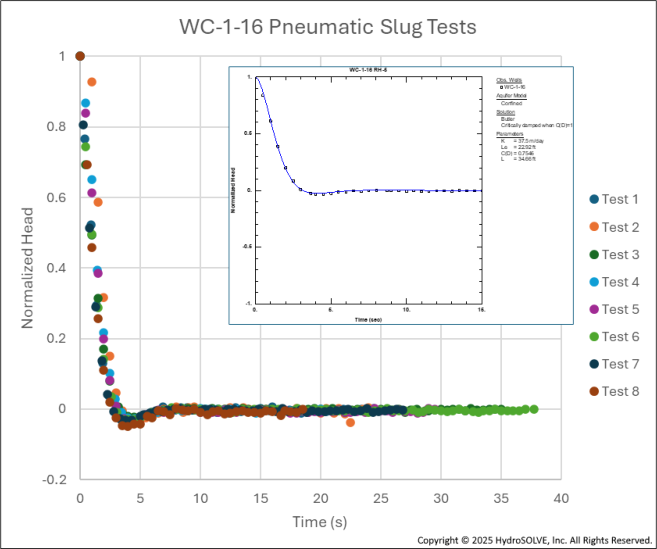
Discover the latest strategies for designing, conducting and analyzing tests in high-K media including oscillatory responses
Gain knowledge of new approaches for decreasing test duration in low-K media
Master all aspects of data collection with the In-Situ Level TROLL
Obtain hands-on experience with AQTESOLV analyzing data from a wide range of geologic settings
Pumping Tests:
Learn to design, conduct and analyze pumping tests in confined, leaky, unconfined and fractured aquifers
Master strategies for dealing with variable pumping rates, wellbore storage, partial penetration, well losses, wellbore skin and other common issues
Discover powerful diagnostic methods including derivative analysis that help you select appropriate pumping test models
Gain an advantage by applying Agarwal's method for analysis of recovery data
Find out the best procedures for monitoring a pumping test with the Level TROLL
Master tips and tricks for using AQTESOLV to analyze constant-rate, step-drawdown and recovery test
"Highly Recommend. Very good quality and broad topics covered in a short time. Well managed." - Chris Alderding, Citic Pacific Mining
"Great course! Great pace of delivery and great presentation. - Daniel Farrow, Aqualinc"
"Excellent in all aspects." - Nathan Littlewood, Origin Energy Brisbane
Registration
Register online for this course.
REGISTRATION INFORMATION:
Advanced registration is necessary for participation in this limited-enrollment short course. Pre-registration is required to reserve space and receive course materials. If you require special arrangements for diet, equipment, or handicap facilities, please indicate when registering for the course.
WHAT YOU WILL RECEIVE:
Participants receive 16.0 contact hours of instruction, Course Notebook, a Field Guide for Slug Testing, continental breakfast, morning coffee break, lunch, and an afternoon break.
OPTIONAL ITEMS:
The online registration allows registrants to add items to their course registration.
Item No 1: Full Color Course Notebook (approx 300 pages) for $89.00. Otherwise your course book is printed in black and white (it still looks great).
REGISTRATION FEE:
Professionals - Register Now: $899.00 (until March 30, 2027)
Professionals - Late Registration: $1,199.00 (after March 30, 2027)
This is a limited enrollment event. This course reaches its maximum capacity each year.
CANCELLATIONS:
Cancellations may be made up to April 1 2027, however, 35 percent of the course fee will be charged. No refunds. One substitute is allowed for each registrant who is unable to attend.
QUESTIONS:
For registration and technical questions about the course, contact Dan Kelleher at either 763.607.0092 or dan@midwestgeo.com
Instructors
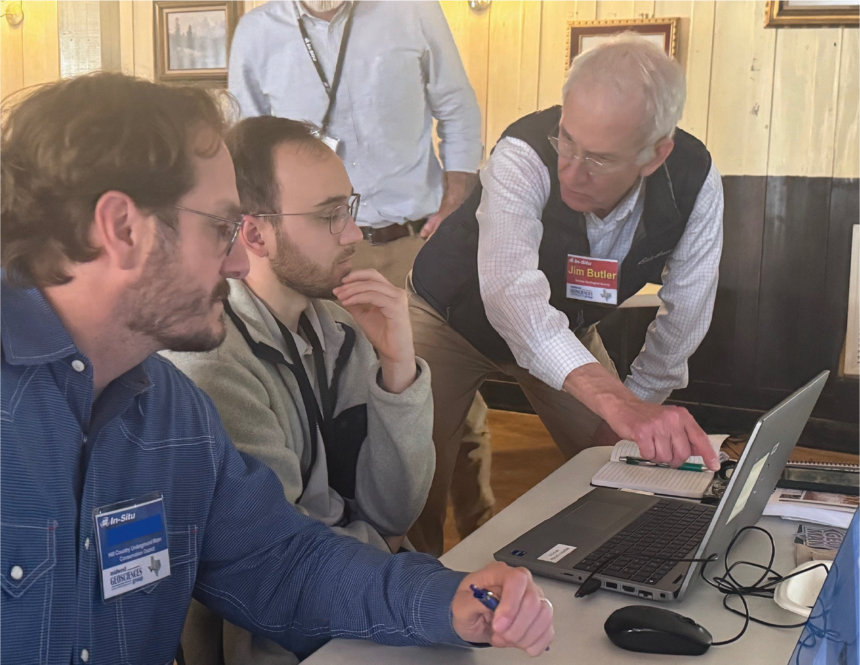
Jim Butler is the author of "The Design, Performance, and Analysis of Slug Tests" (Second Edition). He currently is a Senior Scientist in the Geohydrology Section of the Kansas Geological Survey at the University of Kansas, where he has worked for over 30 years.
His research interests include aquifer testing, assessment of aquifers that support irrigated agriculture, high-resolution subsurface characterization, well responses to natural and anthropogenic stimuli, and the role of phreatophytes in stream-aquifer systems.
Jim holds a B.S. in Geology from the College of William and Mary, and a M.S. and Ph.D. in Applied Hydrogeology from Stanford University. Jim was the 2007 Darcy Distinguished Lecturer of the National Ground Water Association (NGWA), the 2009 Pioneers in Groundwater Award honoree by the American Society of Civil Engineers - Environmental and Water Resources Institute, and, most recently, the 2020 recipient of NGWA's M. King Hubbert Award.
Jim helps advance the environmental and engineering industry through teaching professionals about both slug testing and pumping tests. Jim has taught more than 40 courses with Midwest GeoSciences Group. This webinar is another step toward that advancement and we are grateful to have Jim Butler teach this purposeful and applied webinar.
Christopher J. Neville, M.Sc., P.Eng., Chief Hydrogeologist
Mr. Christopher J. Neville, M.Sc., P.Eng., is Chief Hydrogeologist with S.S. Papadopulos & Associates, Inc. (SSP&A). He directs the operations of SSP&A's office in Waterloo, Ontario. Mr. Neville is a seasoned groundwater professional with over thirty five years of progressive experience in quantitative hydrogeology, with specialization in the interpretation of hydrogeologic data and the analysis of groundwater problems in complex granular and fractured porous media. Mr. Neville obtained his B.Eng. (Civil) from McGill University in Montreal in 1985, and his M.Sc. degree in Earth Sciences (Hydrogeology specialization) from the University of Waterloo in 1992. He is registered as a professional engineer in the provinces of Ontario and Manitoba.
Mr. Neville has experience in the synthesis of hydrogeologic data, the interpretation of aquifer testing data, and the development of analytical and numerical approaches for the evaluation and protection of groundwater resources, and the analysis and design of remedial measures. His project experience includes the simulation of the evolution and future migration of dissolved contaminants and nonaqueous phase liquids.
Mr. Neville has contributed to workshops, webinars and online courses with Midwest GeoSciences since 2007. He has developed and taught professional short courses on applied groundwater modelling, through S.S. Papadopulos & Associates, Inc., and through the International Ground Water Modelling Center. He has co taught graduate courses at the University of Waterloo on analytical solutions in hydrogeology, where he continues to lecture on aquifer testing. He is actively involved in the development of professional webinars and short courses devoted to the interpretation of pumping tests and groundwater modelling.
Testimonials
"These are the guys who literally wrote the book - excellent course, very helpful, and cutting edge." - Paul Blubaugh, Michael Pisani & Associates, Inc.
"In-Situ, Inc did an amazing job hosting this training." - Kristin Brown
"In-Situ facility was good and I like that they gave a tour of their facility." - Ed Bertch
"I like the applied knowledge and experience conveyed by the instructors." - Jaron Andrews
"Course notebook and handouts are amazing..." - Ben Paras
"This course took (my aquifer testing) experience to the next level." - Jake McDermott
"This course was ... what I hoped it would be." - Tim Daniluk
"(The instructors) are each extremely knowledgable and capable teachers." - Scott Sigler
"Good communicating of material and good range of content level; easy to follow; very welcoming environment." - Justan Bell
"Jim Butler and Glenn Duffield are great teachers and knowledgeable experts." - Jay Mednick
"Well presented content and enthusiastic (instructors)." - Trevor Branch
Venue and Accommodations
CLASSROOM VENUE:
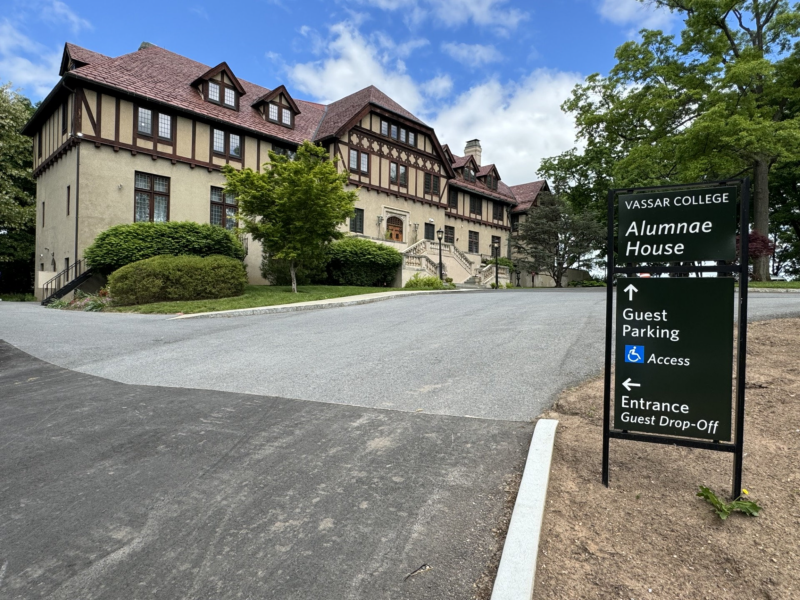
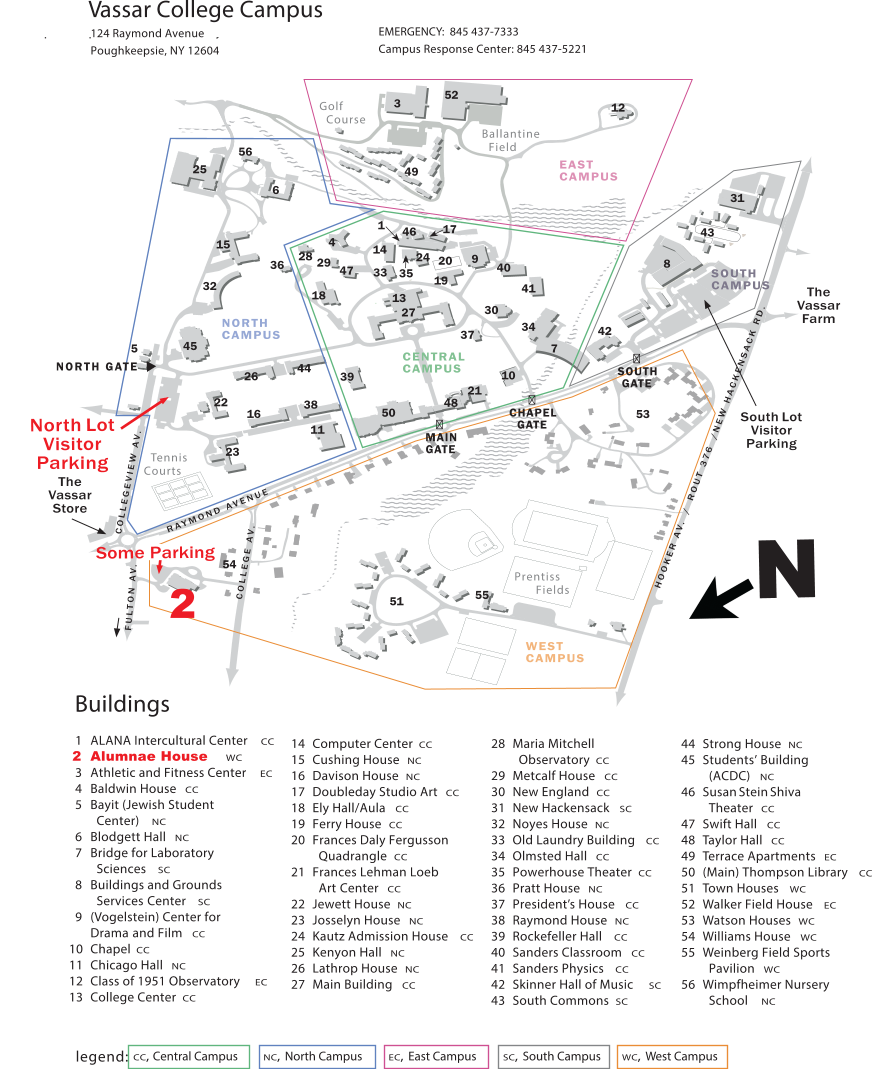
Alumae House
VASSAR COLLEGE
161 College Ave
Poughkeepsie, NY 12603
A classic example of American-Tudor style architecture, Alumnae House is filled with impressive artwork, period furniture, Vassar memorabilia, cozy reading nooks, and working fireplaces. The living room is majestic with its hand-painted ceiling and Violet Oakley Triptych. The walnut-paneled dining room features an inlaid ceiling and musician's gallery, while the Pub showcases murals by Anne Cleveland. The library contains a complete set of Vassar yearbooks, books about Vassar, and books authored by Vassar alums.
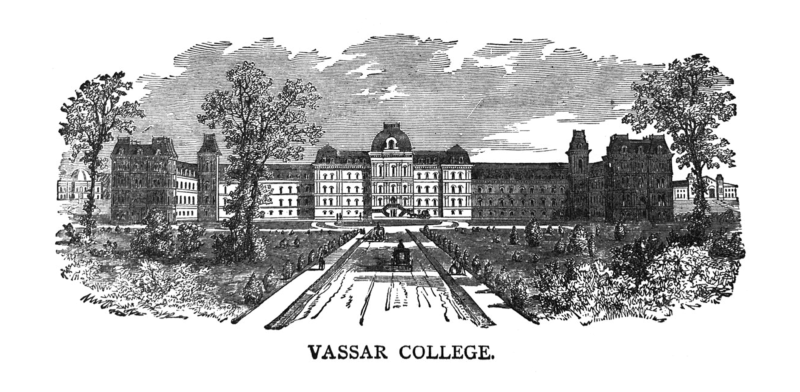
An English-born businessman, Matthew Vassar established VASSAR COLLEGE in Poughkeepsie, New York, a small city on the Hudson River, 75 miles north of New York City. For the first time, women were offered courses in art history, physical education, geology, astronomy, music, mathematics, and chemistry.
Vassar was designed strictly for women and historically as "sister institutions" to the all-male Ivy League colleges. Today, the Vassar curriculum is broader ranging from Latin to cognitive science, from biochemistry to religion, from astronomy to Africana studies. Vassar, among the first to offer courses in drama, psychology, and various languages, has experimented with interdepartmental courses since the early 1900s and has long been recognized for curricular innovation.
Vassar decided to open its doors to men in 1969. In keeping with its founding spirit, Vassar was the first all-women's college in the country to become coeducational; Vassar is currently 56% women and 44% men with an annual enrollment of about 2,450 students.
Advance registration is necessary for participation in limited-enrollment short courses and workshops. Registration is on a first come, first served basis.
Pre-registration is required to reserve space and receive course materials.
Safety and integrity is paramount. Each participant is responsible for his/her own safety and agrees to help keep all other participants safe. No harassing behavior or intimidation is acceptable. All affiliates of this course want each participant to feel comfortable during our events.
Visitors are not permitted to access the classroom or field workshop areas.
A LIABILITY WAIVER is required to be accepted and signed by each participant in all events. The LIABILITY WAIVER is sent via email to all registrants about two weeks before the event and is required to be returned to Midwest GeoSciences Group on or before the event's registration date.
A waiting list of potential registrants is initiated when registration exceeds the allowable classroom maximum.
One substitute may be allowed for one registration in case the original registrant cannot attend.
No refunds for No-Shows.
We are glad to arrange for a special diet, equipment, or handicap facility. We only ask that you let us know when registering for the course.
Misrepresentation of organization affiliation to access an exclusive discount for that organization is a breach of your registration agreement whereby having your registration removed and payment forfeited or accepting full professional registration fee.
Members Login
Become A Member
It's Free, It's Easy and as a Member you'll enjoy...



 Midwest GeoSciences Group can help! We have designed a powerful three-day training course on aquifer testing design, field methods, and data analysis techniques featuring AQTESOLV and the In-Situ Level TROLL. This course will provide you with the knowledge to master aquifer testing from beginning to end--using world-class field equipment and aquifer test analysis software.
 Participants receive 16.0 contact hours of instruction, Course Notebook, a Field Guide for Slug Testing, continental breakfast, morning coffee break, lunch, and an afternoon break.

 Jim Butler is the author of "The Design, Performance, and Analysis of Slug Tests" (Second Edition). He currently is a Senior Scientist in the Geohydrology Section of the Kansas Geological Survey at the University of Kansas, where he has worked for over 30 years.