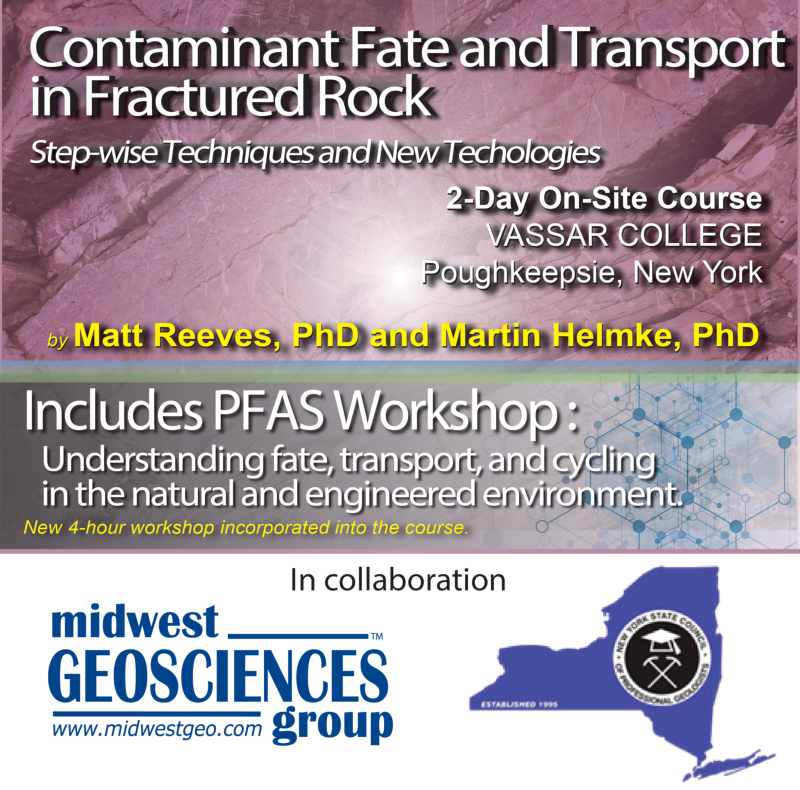
May 14-15, 2026 Thursday and Friday (8am to 5:30pm both days)
Location:
The Alumnae House Vassar College Poughkeepsie, New York
Instructors:
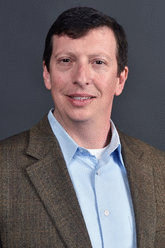
• Matt Reeves, PhD, Hydrogeologist, Professor, Department of Geological and Environmental Sciences Western Michigan University
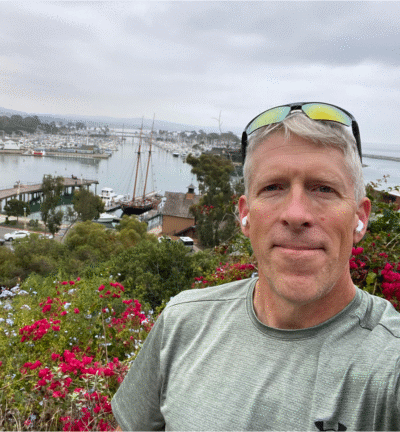
• Martin Helmke, PG, PhD, Hydrogeologist, and Professor, West Chester University
Hosted By:
Midwest GeoSciences Group
New York State Council of Professional Geologists
Continuing Education Information:
16.0 Professional Development Hours
1.6 Continuing Education Units (CEUs)
NY PGs and NY PEs, meets continuing education requirement.
NJ LSRP Course # 2026-010.
PA PGs eligible for 960 minutes.
MA LSP Approved Course Number #1924 (16.0 PDHs).
CT LEP Approved Course Number #CTLEP-641 (16.0 PDHs).
NH PGs eligible for 16.0 PDHs.
NC PGs eligible for 16.0 PDHs.
SC PGs eligible for 16.0 PDHs.
TX PGs eligible for 16.0 PDHs.
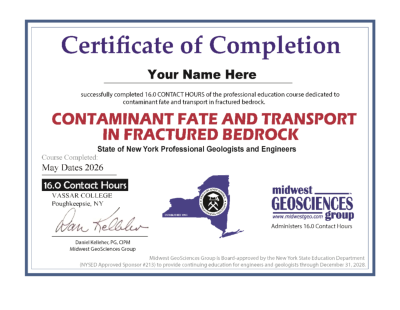
NY Professionals receive a special NY SED-approved CE certificate from Midwest GeoSciences Group (Approved Provider #213).
All participants receive a Course Completion Certificate administered by Midwest GeoSciences Group (must participate in the full 2-day course).
Who should attend:
Everyone who performs subsurface work.
Especially professional groundwater scientists, engineers, project managers, compliance-program managers and remedial-design managers who work at site with fractured bedrock.
How to Prepare:
Prepare for the course by having a mindset to learn. The instructors have created a 2-day learning experience that builds on step-wise procedures to measure, monitor and calculate fate and transport of different contaminants in different types of bedrock formations.
We start at the beginning and boldly address the challenges we all face in our profession...and then move into principles of contaminant fate and transport. A pre-requisite in hydrogeology is more than helpful.
Premise:
The hydrogeologic complexity of fractured rock aquifers has often led to frustration and significant expenditure of resources in characterizing groundwater and predicting contamination. It is not uncommon to experience persistent contamination at fractured rock sites subjected to long-term pump and treat remedial technologies.
Fluid flow and contaminant transport in fractured rock fundamentally differs from granular porous media as fractures serve as interconnected and spatially discontinuous preferential pathways. Given the high degree of heterogeneity, fractured rock hydrogeology is very challenging but not impossible if site-specific data on physical and hydraulic fracture properties are used to properly develop conceptual models of fluid flow and contaminant transport.
In this course, participants will learn step-wise procedures to develop professional level conceptualizations of fracture networks for a variety of rock types, fracture patterns, and tectonic settings for application to field-scale transport problems and the assessment and design of remedial strategies.
PFAS are a problematic group of anthropogenic contaminants wreaking havoc for scientists, engineers, and regulators. The challenge partly originates because PFAS are recalcitrant in the environment and pervasively cycle through air, water, and aquatic and terrestrial ecosystems, while containing over 10,000 individual compounds, many of which go undetected.
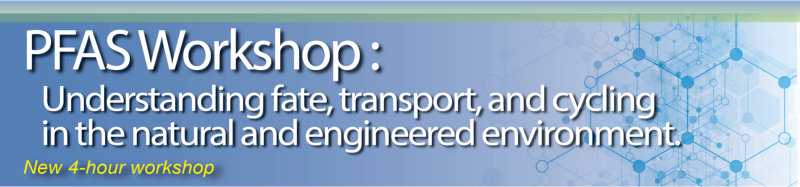
We've added a 4-hr workshop dedicated to PFAS into this 2-day CE course that introduces categorization and physiochemical properties of the most commonly detected compounds, precursors and chemical transformations, US EPA 1633 draft analytes, fate, transport, and cycling in the natural and engineered environment, and removal and treatment.
Per- and Polyfluorinated Alkyl Substances (PFAS)
This course includes a special session dedicated to applying fracture properties for acquiring reliable contaminant migration and retention data.
Be prepared for exercises designed to teach (and challenge your) conceptualization skills in applying the information learned towards common applications of contaminant fate and transport in fractured rock. Although lithologic and hydrologic conditions of each fractured rock site are unique, this course highlights the common attributes that are to be anticipated in all fractured rock sites. These techniques are the same ones that Matt Reeves have applied successfully in his research at the Nevada Test Site.
Copyrighted images used with permission from various sources: Jessica Wilder, Tim Kemmis, David Hart, Martin Helmke, Dan Kelleher
Course Elements
Understand how fluid flow and contaminant transport in fractured rock fundamentally differs from granular porous media.
Conceptualize fracture flow and contaminant transport at the field-scale for a variety of rock types, fracture patterns, and tectonic settings.
Distinguish between discrete fracture network and equivalent continuum representations, including simplifying assumptions and suitable applications.
Link fracture attributes such as orientation, density, length, spacing and clustering to fluid flow and contaminant transport behavior.
Apply site-specific fracture information to develop transport predictions and remedial strategies.
Plus the New PFAS Workshop added this year.
Take the Time to Sharpen Your Skills
Register for this course because it is a meaningful training experience. The CEUs are great, but we trust you'll attend because it's designed for professional skill development.
If you've been to previous Midwest GeoSciences Group courses and workshops, you already know that we design uniquely powerful training experiences. CEUs are important and they are part of this course, but we trust you register because technical excellence is the priority.
Regional Geologic Formations
The sessions in this course can be applied to nearly every geologic bedrock type. This 2-day session is completely in the classroom.
There is no field trip associated with this course. However we will have local rock cores at the course and organized discussions about the regional geology.
REGISTRATION INFORMATION:
Seating is Limited
Advanced registration is necessary for participation in this limited-enrollment short course. Pre-registration is required to reserve space and receive course materials. If you require special arrangements for diet, equipment, or handicap facilities, please indicate when registering for the course.
Register online for this course.
WHAT YOU WILL RECEIVE:
Participants receive 16.0 hours of instruction, light breakfast, lunch, printed course notebook, a FIELD GUIDE FOR ROCK CORE LOGGING AND FRACTURE ANALYSIS, course completion certificate from West Chester University for qualifying participants.
This course is uniquely designed with lectures and exercises that create a meaningful learning experience to decipher the complexities of contaminant fate and transport in fractured rock.
DISCOUNT OPTIONS:
Option 1: Members of both the New York State Council of Professional Geologists and Midwest GeoSciences Group are eligible for registration discount during the early registration period. Receive up to $450 in discounts when members of both register before the early registration deadline.
Option 2: Bundling the course IMPROVING SOIL BORING LOGS AND ROCK CORE LOGGING with this course allows a discounted price at checkout.
REGISTRATION:
ONLY $549*
Early Registration Fee (NYSCPG member alone): $649.00
Early Registration Fee (MidwestGeo member alone): $699.00
*Early Registration Fee (dual membership): $549.00
Early Registration Fee (non-member): $799.00
Late Registration Fee (member or non-member): $999.00
FREE FIELD GUIDE FOR ROCK CORE LOGGING AND FRACTURE ANALYSIS with each course registration
OPTIONAL ITEMS:
The online registration allows registrants to add items to their course registration.
Item No 1: Full-Color Printed Notebook for $89.00.
EARLY REGISTRATION DISCOUNT:
Early registration discounts may be applied when payment is received by April 30, 2026.
Terms and Conditions apply.
CANCELLATIONS:
Cancellations may be made up to May 1, 2026, however, 50 percent of the course fee will be charged or a credit will be issued. No refunds after May 1, 2026. Refunds are issued at the time when the course is conducted.
SUBSTITUTIONS:
One substitute is allowed for each registrant who is unable to attend.
QUESTIONS:
For registration and technical questions about the course, contact Dan Kelleher at either 763.607.0092 or dan@midwestgeo.com
MATT REEVES, PhD
Matt Reeves is an internationally recognized hydrogeologist with over 25 years of research, teaching, and consulting experience. He is a Professor of hydrogeology at Western Michigan University, and former director of WMU's nationally-recognized Hydrogeology Field Course. Dr. Reeves' research involves fluid flow, heat and contaminant fate and transport in the environment, with a specialty in fractured rock systems and emerging contaminants.
Much of his work studying contaminant fate and transport in fractured rock is based on landmark research on radionuclides released from underground nuclear tests in fractured rock on the Nevada National Security Site. He has also applied his fractured rock expertise to related challenges in climate change impacts on water resources, geologic waste disposal, geothermal energy, hydraulic fracturing, and mining.
More recently, Dr. Reeves has focused on emerging contaminants such as PFAS and microplastics. His interest in the fate and transport of PFAS has evolved to include field-based investigations to characterize PFAS within environmental, solid waste, and wastewater media, and quantifying the interactions and cycling between engineered systems (landfills, landfill leachate, stormwater, and wastewater treatment plants) and the natural environment.
Matt promotes organized thinking according to the scientific process of Multiple Working Hypothesis during fractured rock projects. His flexible mindset combines innovative approaches in analyzing and interpreting field data with an ability to understand how fracture properties relate to contaminant migration and retention.
Course participants will benefit from not only the step-wise techniques for learning fate and transport of contaminants in fractured rock from Matt, but also the paradigm for a new mindset that promotes innovation for analyzing field data. The 3-hr PFAS segment will provide unique insights into the PFAS group of contaminants and their fate and transport.
MARTIN H. HELMKE, PG, PhD
Martin Helmke is an internationally-recognized hydrogeologist with over 30 years experience as an educator and environmental consultant. He is a Full Professor of Hydrogeology at West Chester University where he teaches Hydrogeology, Field Geology, Soils, Engineering Geology, Environmental Geology, Geophysics, Physical Geology, and Science of Natural Disasters. Before joining West Chester University, he taught at Dickinson College, Iowa State University, Antioch College, and Directed the Geology Field Camp for Iowa State University and University of Nebraska in Shell, Wyoming. He has worked for the U.S. Geological Survey (Reston, VA), Versar (Springfield, VA), HydroLog (Yellow Springs, OH), Aquadrill (Coralville, IA), BAI, Inc. (Royersford, PA), Tetra Tech EGS (King of Prussia, PA), Groundwater and Environmental Services, Inc. (Exton, PA). He is currently President of Helmke Hydrogeologic, LLC.
Dr. Helmke's academic and professional expertise includes contaminant fate, transport, and remediation in fractured rock and soils; groundwater flow modeling; environmental geochemistry; PFAS fate and transport through saturated, unsaturated, and fractured media; hazardous materials response; geologic and UXO applications of UAVs; environmental geophysics; wastewater and stormwater infiltration; karst hydrogeology and subsidence; and stochastic risk assessment.
Martin is actively engaged with the professional geologist community. He is currently a member of the Pennsylvania State Registration Board for Professional Engineers, Land Surveyors, and Geologists and is a Subject Matter Expert for the Association of State Boards of Geology (ASBOG). He is a past Department Chair and past President of the Pennsylvania Council of Professional Geologists. He has also served his community as a firefighter/EMT, Hazardous Materials Specialist, Technical Rescue Specialist, and officer with the Chester County Department of Emergency Services and Chester County Rescue Task Force in Southeast Pennsylvania.
CLASSROOM VENUE:
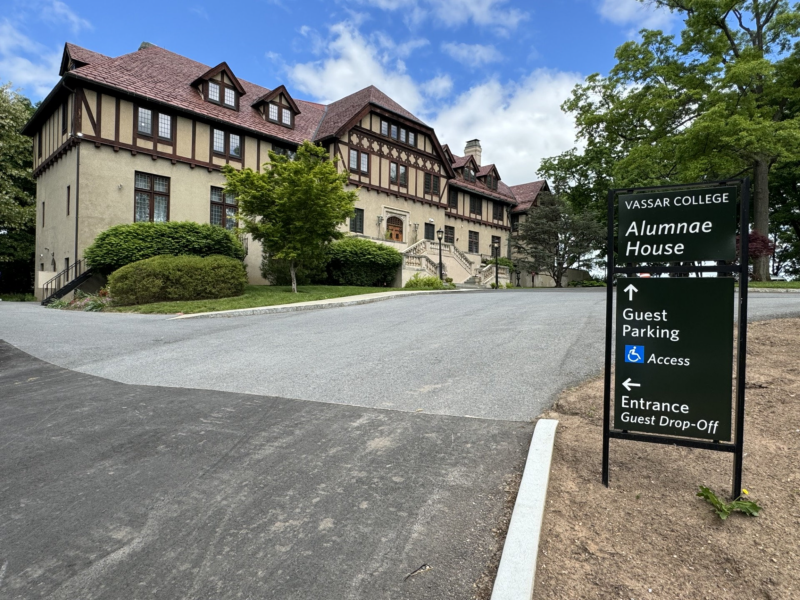
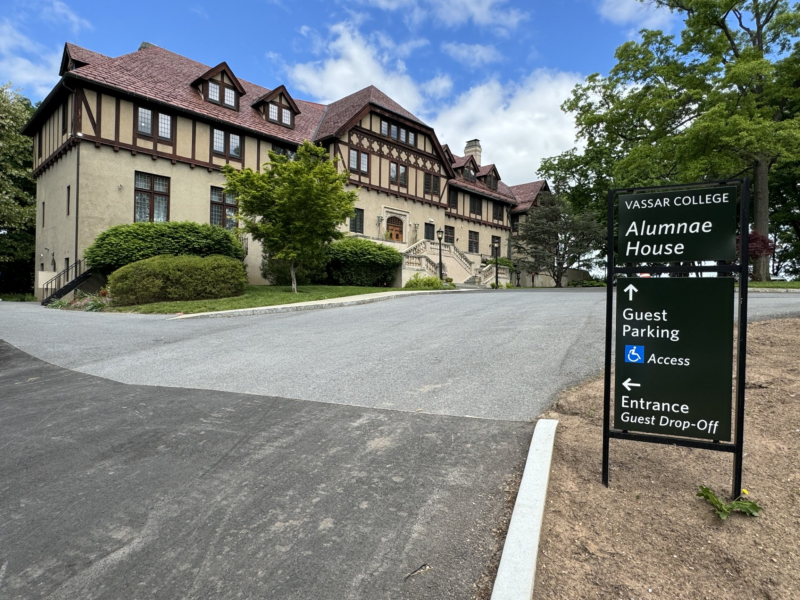
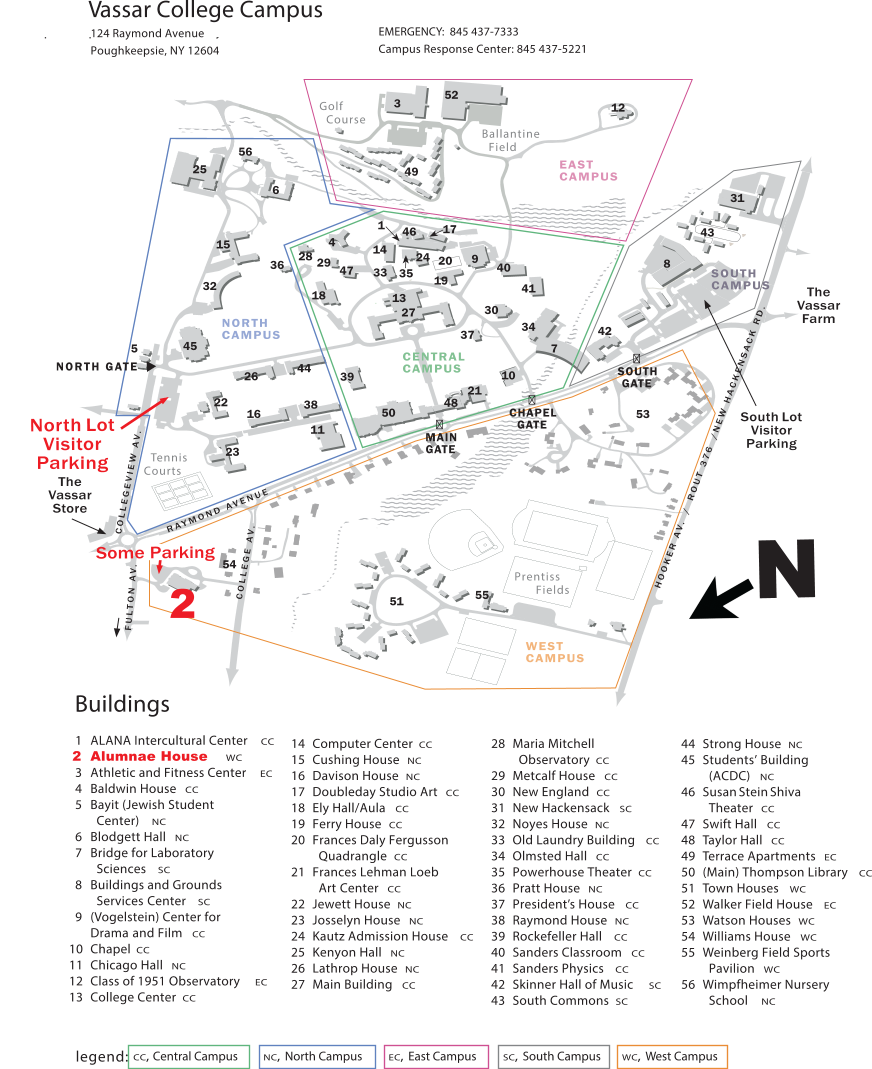
Alumae House
VASSAR COLLEGE
161 College Ave
Poughkeepsie, NY 12603
Celebrating its 100th anniversary in 2024, Alumnae House was gifted to Vassar College by sisters Blanche Ferry Hooker, class of 1894, and Queene Ferry Coonley, class of 1896. They intended it to be a center for the activities of the alums of the College, but more importantly wanted all alums to have a welcoming space that they could call home when returning to campus.
A classic example of American-Tudor style architecture, Alumnae House is filled with impressive artwork, period furniture, Vassar memorabilia, cozy reading nooks, and working fireplaces. The living room is majestic with its hand-painted ceiling and Violet Oakley Triptych. The walnut-paneled dining room features an inlaid ceiling and musician's gallery, while the Pub showcases murals by Anne Cleveland. The library contains a complete set of Vassar yearbooks, books about Vassar, and books authored by Vassar alums.
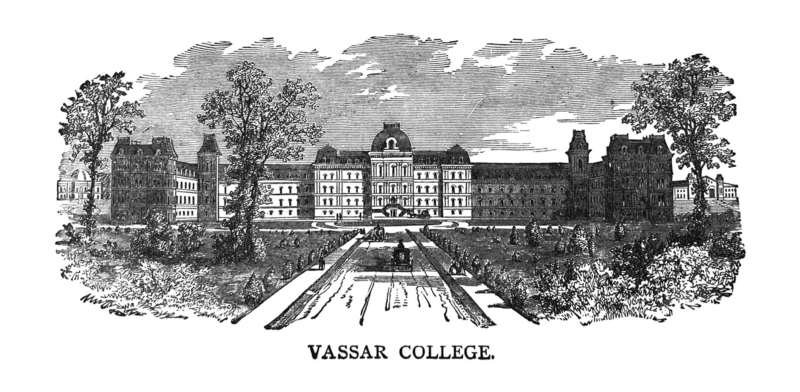
An English-born businessman, Matthew Vassar established VASSAR COLLEGE in Poughkeepsie, New York, a small city on the Hudson River, 75 miles north of New York City. For the first time, women were offered courses in art history, physical education, geology, astronomy, music, mathematics, and chemistry.
Vassar was designed strictly for women and historically as "sister institutions" to the all-male Ivy League colleges. Today, the Vassar curriculum is broader ranging from Latin to cognitive science, from biochemistry to religion, from astronomy to Africana studies. Vassar, among the first to offer courses in drama, psychology, and various languages, has experimented with interdepartmental courses since the early 1900s and has long been recognized for curricular innovation.
Vassar decided to open its doors to men in 1969. In keeping with its founding spirit, Vassar was the first all-women's college in the country to become coeducational; Vassar is currently 56% women and 44% men with an annual enrollment of about 2,450 students.
Our Mission
The New York State Council of Professional Geologists (NYSCPG) is the principal organization of professional geologists responsible for the advancement of the competent and ethical practice of geology in New York State. NYSCPG's primary missions, on behalf of its members, are to strengthen and advance the application of geological sciences as a profession by providing leadership, advocacy, and education to promote the protection of public health, safety, and welfare, and the balanced protection of the environment.
Become a Member
Click here to Become a NYSCPG Member
NYSCPG Members can Save on this Course
Use the following Promotion Code at checkout to Save $150 NYSCPG-SAV150
The New York State Council of Professional Geologists and Midwest GeoSciences Group have collaborated many times. Our first collaborative CE course was in October 2019 with Modern Technologies and Emerging Techniques for Assessing Complex Hydrogeologic Systems in Fractured Bedrock. After a hiatus from COVID, MidwestGeo was invited to help NYSCPG with instruction and advertising of Bill Truby's webinar, How "Ethics" Define and Confine Corporate Culture Behavior. NYSCPG helped MidwestGeo in 2022 with a mutually beneficial website promotion of the 8.0 online course, Challenges and Strategies for Implementing Environmental Sequence Stratigraphy. In 2025, we packed the classroom with two maxed-out pairs of Modern Contaminant Hydrology courses at VASSAR COLLEGE.
But probably the most fun NYSCPG collaborative event that MidwestGeo helps support is the annual fun NYSCPG's Geology Days. Each November, Professional Geologists descend on Saratoga Springs for NY camaraderie (and CEUs).
2026 Registration and Cancellation Policies
Advance registration is necessary for participation in limited-enrollment short courses and workshops. Registration is on a first come, first served basis.
Pre-registration is required to reserve space and receive course materials.
Safety is paramount. Each participant is responsible for his/her own safety and agrees to help keep all other participants safe. No harassing behavior or intimidation is acceptable. Event hosts want all participants to feel comfortable and nurture a learning environment for everyone.
A LIABILITY WAIVER is required to be accepted and signed by each participant. The LIABILITY WAIVER is sent via email to all registrants at the time of online registration and required to be returned to Midwest GeoSciences Group on or before May 11, 2026.
A waiting list is prepared of potential registrants when registration exceeds the allowable maximum. Twenty-five participants must be registered at the early registration deadline to conduct any course.
Early registration discounts may be applied when payment is received by the early registration deadline. If payment is not received by the early registration deadline, MidwestGeo reserves the right to remove your registration.
One substitute may be allowed for one registration in case the original registrant cannot attend. This applies to any combination between courses.
No refunds for No-Shows.
Cancellations may be made up to May 1, 2026, however, 50 percent of the course fee will be charged or a credit will be issued. No refunds after May 1, 2026. Refunds are issued within 10 days following completion of the event.
COVID: All affiliates for this event follow the COVID protocols set forth by the Venue.
Promotional Codes may be applied retroactively up to 10 days following the participant's registration date. Retroactive application expires on the date that is 15 days before the course date. If a participant fails to apply a promo code or any discount during registration and does not retroactively apply it during the 10-day period, a credit may be issued toward webinars, online courses, SINGLE USER ONLINE TRAINING SUBSCRIPTION, or CORPORATE ONLINE TRAINING SUBSCRIPTION.
We are glad to arrange for a special diet, equipment, or handicap facility. We only ask that you let us know when registering for the course.
Misrepresentation of organization affiliation to access an exclusive discount for that organization is a breach of your registration agreement whereby having your registration removed and payment forfeited or accepting full professional registration fee.
Members Login
Become A Member
It's Free, It's Easy and as a Member you'll enjoy...